
Stick to the process
With a week stuffed as full as two, we were feeling the strain. A diversion leads to frustration and a reminder to stick to the process.

The week was stuffed to overflowing with maintenance and upgrade projects, learning new skills and a celebration. It was so full it felt like two weeks crammed into one.
As you may know we are in the throes of doing some upgrades to our home, the place we also call work. With the upgrades to the cupboards all but completed in the guest room we had to vacate the main bedroom and empty all the cupboards so that those could be dismantled ready for a new set to be installed.
We are lucky to have a guest room big enough to temporarily accommodate us. Monday morning was vacuumed up moving out of our room and into it. What is usually quite a disruptive day was loaded with more disruption and disorder.
Plenty of fire energy
On Tuesday, Chantal’s birthday coincided with both the Chinese New Year heralding the Year of the Fire Horse as well as a solar eclipse. With plenty of fire energy spiraling in the environment we carried on as normally as we could.
Matthew was buffeted by persistent requests for input and direction during the day. He found it difficult to stay seated for any length of time as the distractions impeded his focus.
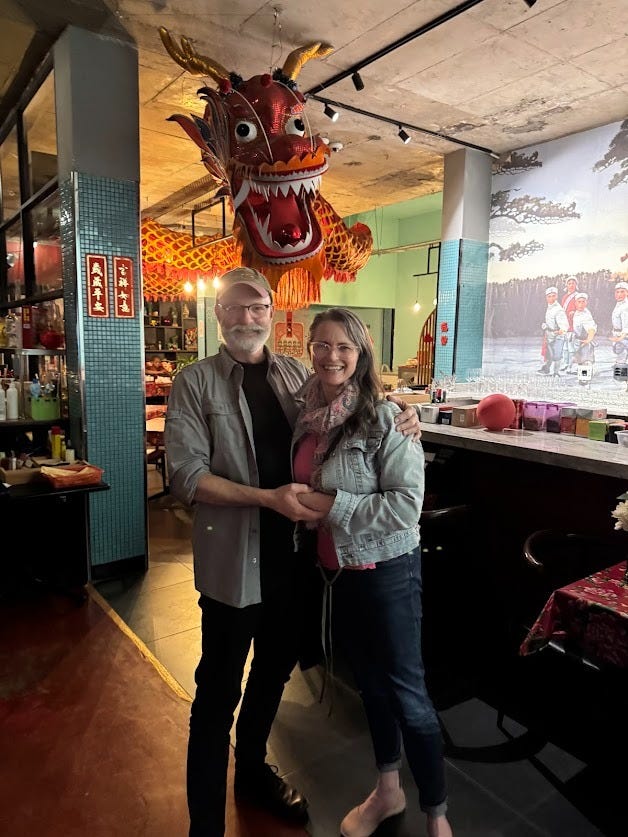
A coffee catch up with a friend came as a welcome respite and dinner for two at PRON (Peoples Republic of Noodles), in honour of the Chinese New Year filled the hunger gaps.
The week continued at a tumbling pace. The balancing act of keeping up with the material and input needs of the renovations, the work that we were trying to get out as well as living in some upheaval impacted us quite significantly.
Bodies over budget
Lisa Feldman Barret talks about the “body budget”, also known as allostasis. This refers to how the brain continuously predicts what the body is going to need and manages its resources to keep it functioning.
Deposits are made in the form of sleep, nutrition and movement. Withdrawals come in the form of overwork and stress.
The brain can only work on what it knows. If it is used to a particular routine and a day that is structured in a specific way, it is more able to easily manage the resources required. Change things even slightly, and the brain needs to do more work, sucking up energy stores.
Sleeping in a different room, with items we’d normally reach for without thought, now stored in different places, made our brains work harder. Just getting ready every morning used more energy and stretched our body budgets in ways we hadn’t planned for.

A head full of tangled wool
We couldn’t avoid the additional strain that came from project managing the renovations as we went. On top of this we were crafting a strategy for multiple spokes in our business wheel.
New skills were being learnt, new ideas were bubbling beneath the surface. There was little clarity and some confusion.
“What am I doing here?” asked Chantal as she dragged herself out of a design she was working on.
She felt clumsy and lacked confidence in the look and feel she had chosen. She wondered why it wasn’t translating as well across the different media styles. Would it look messy and unprofessional?
“My head feels like it is full of tangled wool,” exclaimed Chantal, after what felt like a particularly long day.
“I keep on forgetting to get back to a client because I am working on too many things at once,” said Matthew.
Stick to the process
To make the changes less impactful we tried to mimic our old routine where we could. At the end of the week Matthew woke with an urgent desire to attend to some work issues that had been impacted by all the interruptions.
He put on his exercise clothes but instead of going directly to the rebounder, he went into the office. As Chantal did her YouTube yoga class she heard the clatter of the keyboard through the doorway.
After Savasana, the final resting pose, she sat up to do her journaling. Then went to shower and change in time for an early online session. When the meeting was over, she walked into the kitchen as Matthew stepped through the door from outside.
“Have you finished jumping?” she asked.
“No,” replied Matthew looking frustrated, “Just as I was going to, Clive arrived with someone who was collecting some of the old cupboards. They needed my input and besides, I couldn’t go jump with them dismantling furniture right there.”
Matthew sat down to breakfast. It was too late to jump now. He was irritated. He had made a commitment to exercise every day. He needed the movement to manage some of the additional stress he was dealing with. He needed it to balance his body budget. It felt as if the day had started off really badly.
“I will jump later this afternoon,” he said with conviction, “And I won’t make the mistake of messing with my system in future. That work could have waited.”
Matthew did jump later and we were reminded of how important it is to stick to the process. With so much going on, our brains were battling to predict. Our body budgets risked teetering towards a deficit.
The best we could do for our bodies and brains was keep to routines and structures that worked, even as the environment around us changed. These daily practices and processes kept us centred and allowed us to maintain a focus on our purpose in the midst of the external whirlwinds that swirled around us.
Until next time.
Yours in feeling,
Chantal & Matthew
Eight years of Shape of Emotion
For the greater part of 2017 we had sat with a question that had no easy answer.
South Africa had the lowest mental health score in the world. Over 17 million diagnosed anxiety disorders in a population of 58 million. 2.8 psychologists per 100,000 people. Eighteen million citizens living at a poverty threshold of $1.90 a day. A country shaped by slavery, colonialism, Apartheid, civil unrest, and ongoing economic collapse.
The maths of the prevailing model simply did not work. One therapist. One patient. One hour. Repeat. There were not enough therapists. There would never be enough therapists. And the children arriving at school every morning, locked in fight-or-flight from the violence and poverty surrounding them, could not learn. Education was supposed to be the way out. But education requires a brain that is online, and a nervous system in survival mode takes that offline.
And so we asked the question: What if we could build something different? Something that works with children and adults. Something that works in groups. An African solution for an African problem.
We had no idea if it was even possible.
On 3 February 2018 in a small room in Linden, Johannesburg we presented Shape of Emotion to a small group of people at a pilot workshop.
Eight years later, Shape of Emotion has been used with people from all over the world. It works and both the world and the science is beginning to finally catch up.
Here’s our homage to Shape of Emotion on its eighth birthday.
Credits for this issue — Images: 5th Place
Written by

Chantal Dawtrey
Supporting women, especially in midlife and beyond, to navigate life transitions · Emotional fitness coach
Chantal supports women, especially in midlife and beyond, to navigate life transitions. She designs and delivers data informed digital programmes that build organisational emotional fitness. She helps people move beyond habitual patterns into greater awareness, agency, and well being.
With over 15 years of coaching experience and more than two decades in facilitation and human development, Chantal partners with individuals, teams, and organizations to build emotional resilience, enhance self-awareness, and develop sustainable well-being strategies.
Her primary focus as a coach is supporting women, especially those in their 50’s and beyond, to navigate profound life transitions with clarity, steadiness and self-reconnection. Finding answers to questions about identity, purpose, belonging and desire to an emergence, a reclamation and a return to self.
If you're going through a transition and would like support, let's talk.

Matthew Green
Reducing the Certainty Deficit in high-performing people and teams · Emotional fitness coach
Matthew works with athletes, performance teams, and anyone who wants to reduce the Certainty Deficit in their situation or context.
The Certainty Deficit is the space between what you can do and what your body will let you do when it counts. It is context-specific and situational. A person or athlete can have zero deficit in one situation and a significant one in another.
The body holds beliefs that keep the Certainty Deficit in place. These beliefs run deeper than self-talk and faster than any conscious strategy. When they shift, the ceiling shifts, and new possibilities arise.
Matthew is also an emotional fitness coach who supports individuals to live and lead from a place of inner clarity and stability. The work is somatic-first, practical, and grounded.
If you're seeing a pattern that current approaches haven't shifted, let's talk.
My origin story: Why elite athletes underperform when it counts
More from Enabling the How

It’s the oats
After weeks of challenge on many fronts it felt as if a threshold had been crossed. A smoother week with resolutions and relief.

The soundtrack to our lives
Leah knows what music she likes, so do we. Music is important to us and has a useful lesson to teach too.

All is not fair
The Boks are back and it’s great to be on the winning side but a wrong call by the ref can change that and the way we feel. All is not fair so managing our state is the real job to be done.