
More evidence than action
An opportunity to present at a conference set us up with mainly representatives from academic and research organisations. Plenty of evidence was presented. Now we need more action.
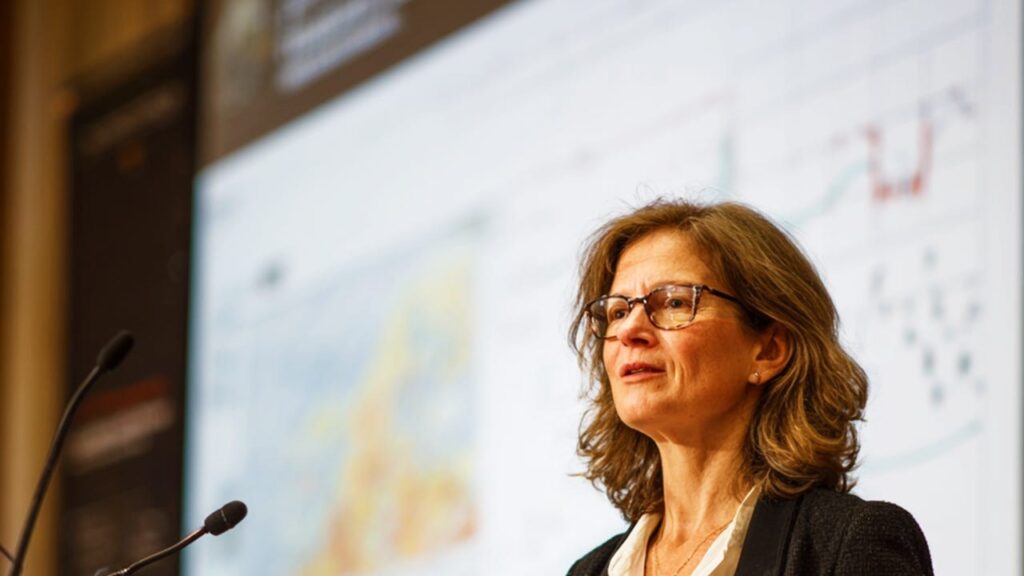
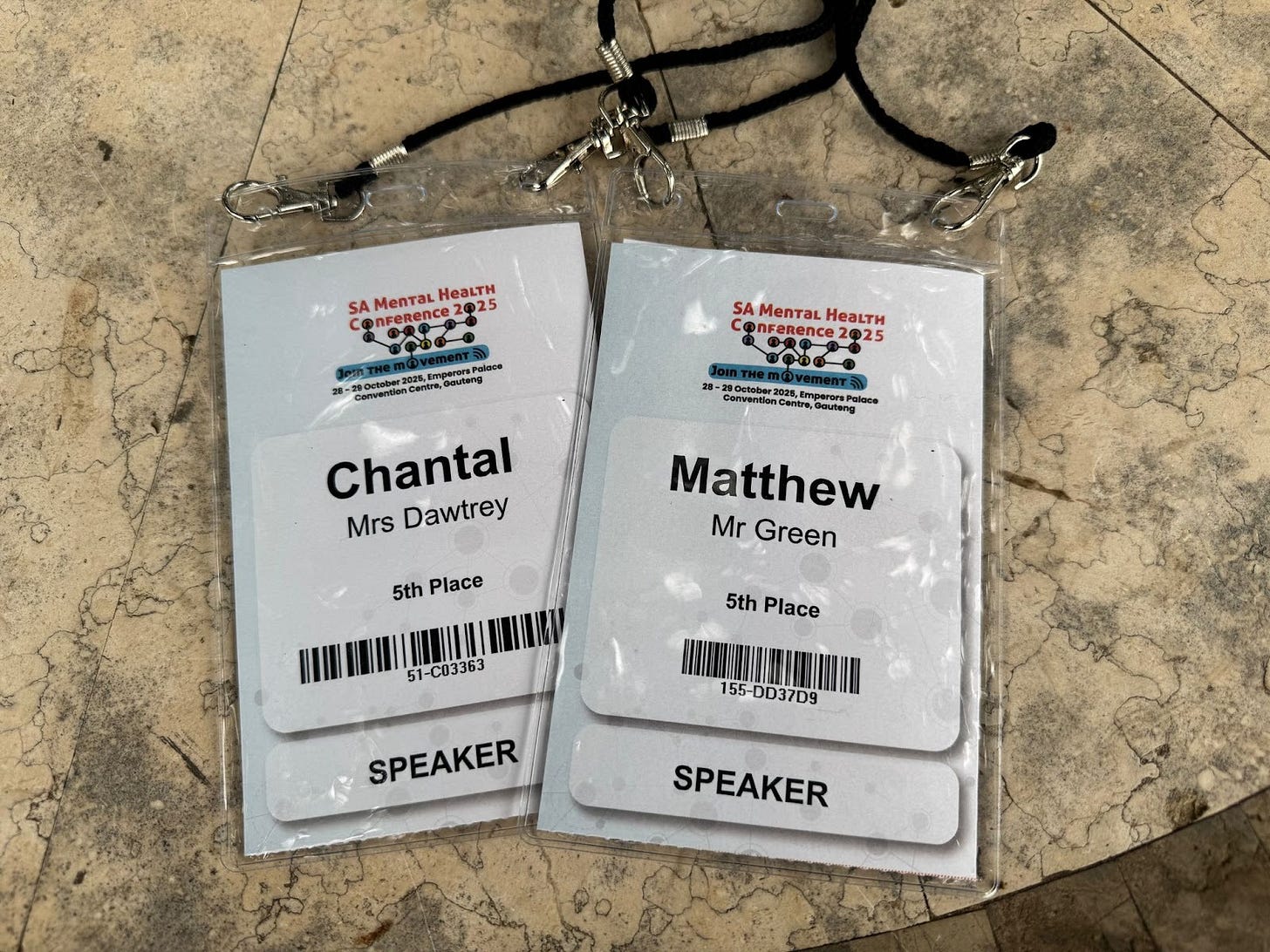
The 2nd South African Mental Health Conference took place at Emperors Palace, Kempton Park, last week. Its theme was Evidence to Action and we were privileged to do two oral presentations and one poster presentation. All were for very different tracks, which said something about the breadth of our work but did confuse some people who sought to find a box to place us in.
The call for abstracts had come through in June with a deadline of 18 July. We originally wanted to submit four options but we ran out of time. We were flying to George on the 18th so on the 14th July we submitted three abstracts for oral presentations: one on our Superpower Programme for youth, one on workplace assessments and the final one on a pilot study for an anxiety intervention.
Some weeks later, we were pleasantly surprised to receive confirmation that the Superpower Programme and the workplace assessment abstracts had been accepted for oral presentations with the anxiety case study accepted for a poster presentation.

On the wrong track
If you have had the opportunity to present at a conference you will know that it is a master co-ordination effort. As a presenter it is useful to check that presentation packs have been received, that they are loaded onto the correct track and work as they should.
As “luck” would have it, Chantal’s presentations had not been received and one presentation was allocated to the incorrect track. Never mind, laptop at the ready, a quick resend was initiated on the fly. Unfortunately it was too late to change the track so we had to make do with where we had been allocated.
The approach and presentation of posters differs from conference to conference. In this instance there were boards set up to stick the posters onto. Unrolling the large A0 sized posters and attaching the double-sided adhesive onto the back and then placing them straight on the screens was really a two person job.
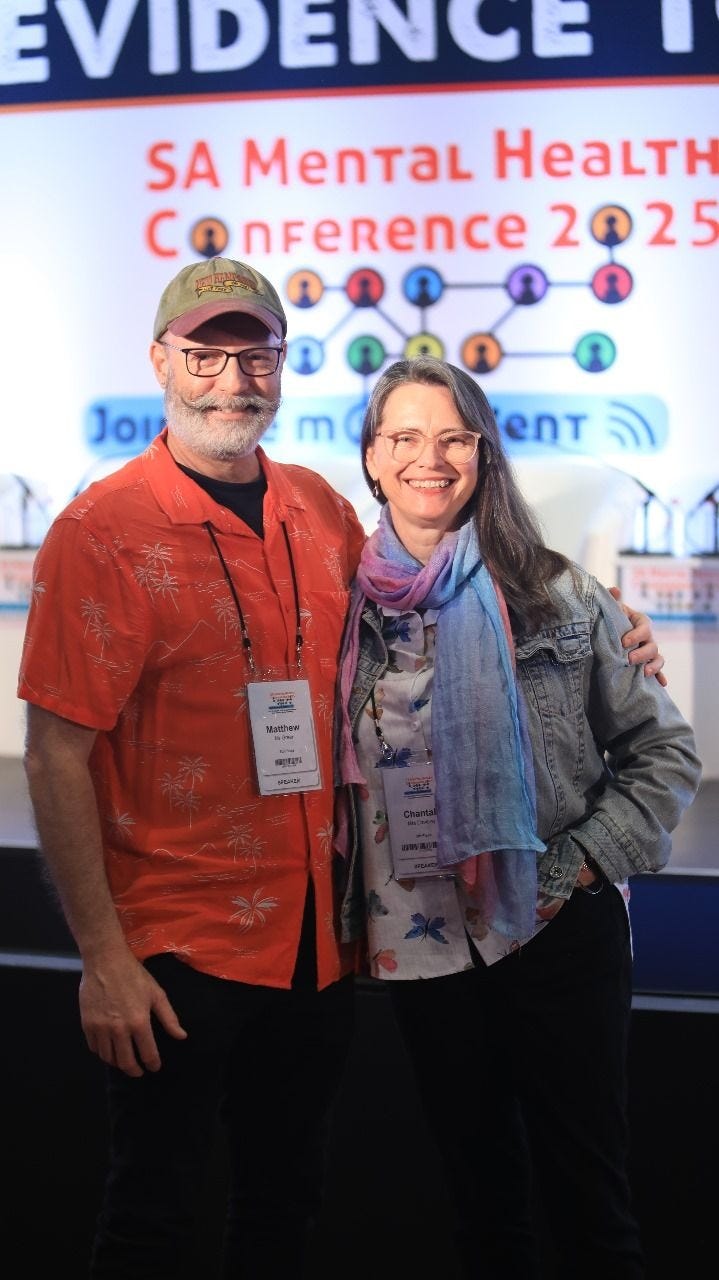
Many of the presenters found themselves getting wrapped up in their own boards, crushing corners and creasing pristine layouts. Matthew stepped in. He helped as many as he could, making friends and connecting with others along the way.
As with any conference, we were enclosed in artificially lit, air conditioned rooms, and subjected to a flood of presentations. Time was tightly managed to fit everyone in and allow for questions: ten minutes for the presentation, five minutes for Q & A.
Presentations on academic research had slides stuffed full of text and peppered with acronyms, numbers and jargon. We even experienced a bit of self imposed competitiveness from some who saw it as their duty to pick holes in other’s research methodology. Speakers and slides started melting into one another in our memories, unless there was a stand out feature or message.
And now for something completely different
Chantal’s first presentation From Numbers to Narratives: A Human-Centred Approach to Workplace Mental Health Assessment was held in the Mental Health among Students and Healthcare Professionals track. A workplace focus in a student track felt a bit like a fish flapping on the sand.
“And now for something completely different,” announced Chantal, battling to see over a towering podium, to an expectant audience.
She explained what had happened with the track allocation and added, “We have used assessment tools in our work with youth and students so when you see ‘workplace’, replace it with ‘academic institution’.”
In spite of this Chantal could see the expressions of disconnect as she worked through the slides. Surprisingly, there were quite a few questions which indicated that some had been listening. WIth some relief she was able to deftly duck the inquiry on research rigor as ours it was not an academic study.
Matthew’s poster presentation, Shape of Emotion: A Pilot Feasibility Study for Anxiety Relief, was an exercise in patience and acceptance. All the effort and energy that was poured onto a piece of cardboard was displayed with many others and engagement was expected over tea and lunch breaks.
He competed with cupcakes and savoury tarts, cuppachinos and networking chatter, a somewhat thankless task. Matthew, though, had a way of engaging with anyone who passed him by and got some others that he met outside of the break sessions to go and have a look too.
Celebrating achievement
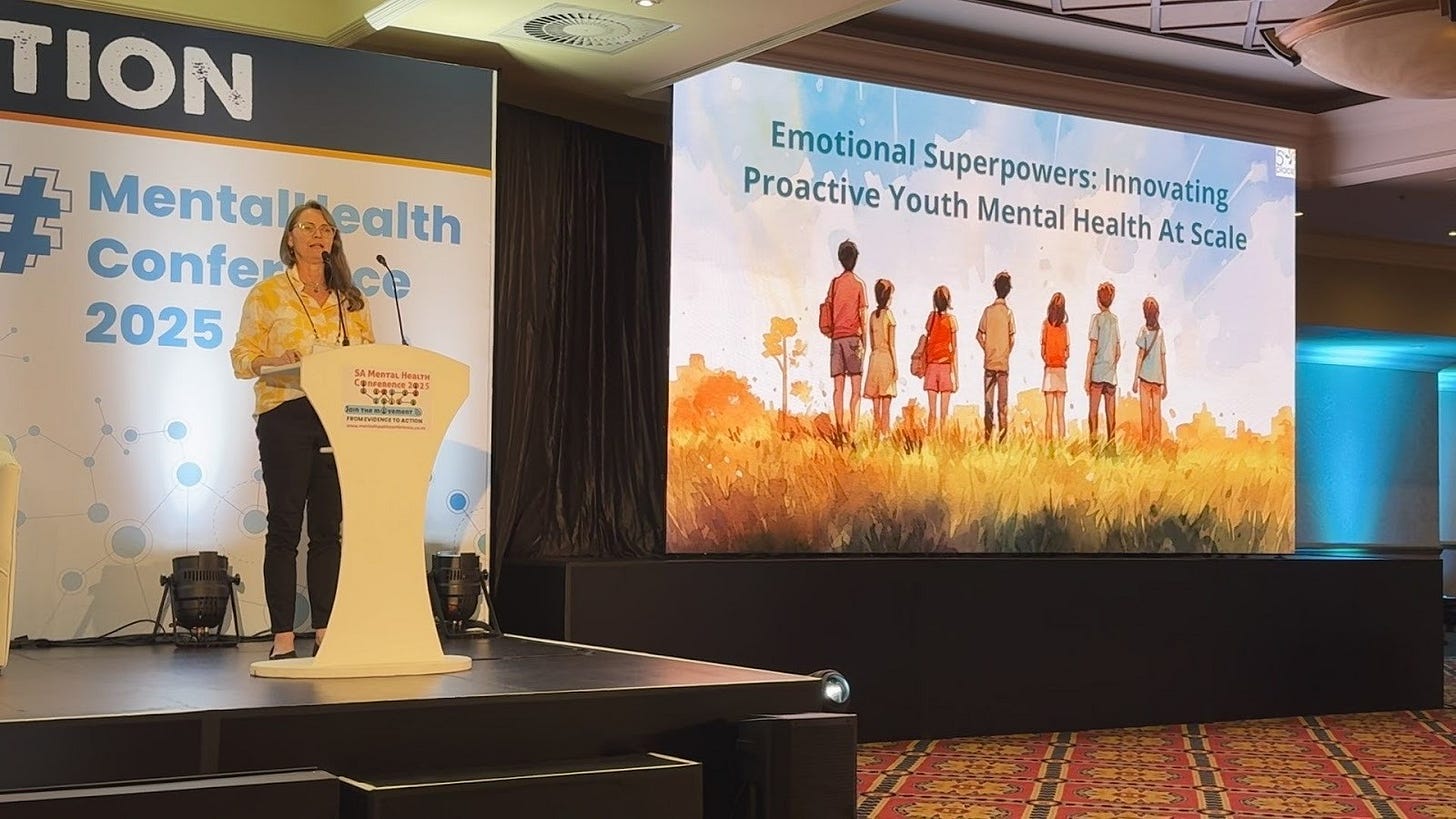
The second presentation called Emotional Superpowers: Innovating Proactive Youth Mental Health At Scale was held on the right track but between 15h30 and 17h00. The graveyard shift of the graveyard section and in the venue furthest away from the tea break area.
Committed to sticking to the time schedule, the venue was only dotted with a few souls who had had their fill of tea when it was time to start. People did arrive later and slowly filled the centre space so that it felt a bit more like an audience than a sad bus terminal at midnight.
Our presentation was well received. The simple approach to proactively building emotional fitness in the high school learners was highlighted as novel and innovative. The well laid out slides and colourful design, care of Matthew, certainly helped keep up the interest and engagement.
“What is SNAK?” asked someone, “And where can we go to learn some of these strategies?”
“Who did your graphics?” asked someone else, “They are beautiful.”
Matthew did the graphics and yes, they are beautiful. Our presentations were definitely not “death by powerpoint” thanks to him.
We felt oversaturated and overstimulated after the very full first day and made sure we had an early night.

More evidence than action
Day two drew to an end, the conference closed with another text-rich presentation. We were called to consider what we were going to work on over the next two years so that when the next conference came around we would have more action to report on.
We gathered ourselves and our stuff for the journey back home but not before Matthew had one more important conversation with an American-born neurologist who works in Hoedspruit.
We had made some useful contacts over the two days. Obviously we could not be present at all the talks but our top take away was that there was a leaning towards academia and research based organisations who offered more evidence than action.
There were those that work directly in the field, action focused NPO’s and organisations who shared the practical solutions that they had developed and delivered. We sensed that stronger collaboration could be possible between these practitioners and academia, and also amongst the practitioners themselves.
The problem of scale remains the biggest challenge. It is systemic and structural. One billion people out there need support. No amount of qualified professionals would put a dent in that need. We need a new paradigm that can scale.
There still seemed to be a lot of working in silos but without conferences like these there would not be the opportunity to come together in one space. The time for talking is not over. The time for talking without coordinated action is.
Until next time.
Yours in feeling,
Chantal & Matthew
Credits for this issue — Images: 5th Place
Written by

Chantal Dawtrey
Supporting women, especially in midlife and beyond, to navigate life transitions · Emotional fitness coach
Chantal supports women, especially in midlife and beyond, to navigate life transitions. She designs and delivers data informed digital programmes that build organisational emotional fitness. She helps people move beyond habitual patterns into greater awareness, agency, and well being.
With over 15 years of coaching experience and more than two decades in facilitation and human development, Chantal partners with individuals, teams, and organizations to build emotional resilience, enhance self-awareness, and develop sustainable well-being strategies.
Her primary focus as a coach is supporting women, especially those in their 50’s and beyond, to navigate profound life transitions with clarity, steadiness and self-reconnection. Finding answers to questions about identity, purpose, belonging and desire to an emergence, a reclamation and a return to self.
If you're going through a transition and would like support, let's talk.

Matthew Green
Reducing the Certainty Deficit in high-performing people and teams · Emotional fitness coach
Matthew works with athletes, performance teams, and anyone who wants to reduce the Certainty Deficit in their situation or context.
The Certainty Deficit is the space between what you can do and what your body will let you do when it counts. It is context-specific and situational. A person or athlete can have zero deficit in one situation and a significant one in another.
The body holds beliefs that keep the Certainty Deficit in place. These beliefs run deeper than self-talk and faster than any conscious strategy. When they shift, the ceiling shifts, and new possibilities arise.
Matthew is also an emotional fitness coach who supports individuals to live and lead from a place of inner clarity and stability. The work is somatic-first, practical, and grounded.
If you're seeing a pattern that current approaches haven't shifted, let's talk.
My origin story: Why elite athletes underperform when it counts
More from Enabling the How

It’s the oats
After weeks of challenge on many fronts it felt as if a threshold had been crossed. A smoother week with resolutions and relief.

The soundtrack to our lives
Leah knows what music she likes, so do we. Music is important to us and has a useful lesson to teach too.

All is not fair
The Boks are back and it’s great to be on the winning side but a wrong call by the ref can change that and the way we feel. All is not fair so managing our state is the real job to be done.