
Presence rather than prediction
Digging into the past, specifically the COVID years, was sobering and sad. The global stress response pushed us into navel gazing when it would have been better to be present to what was. Not easy on
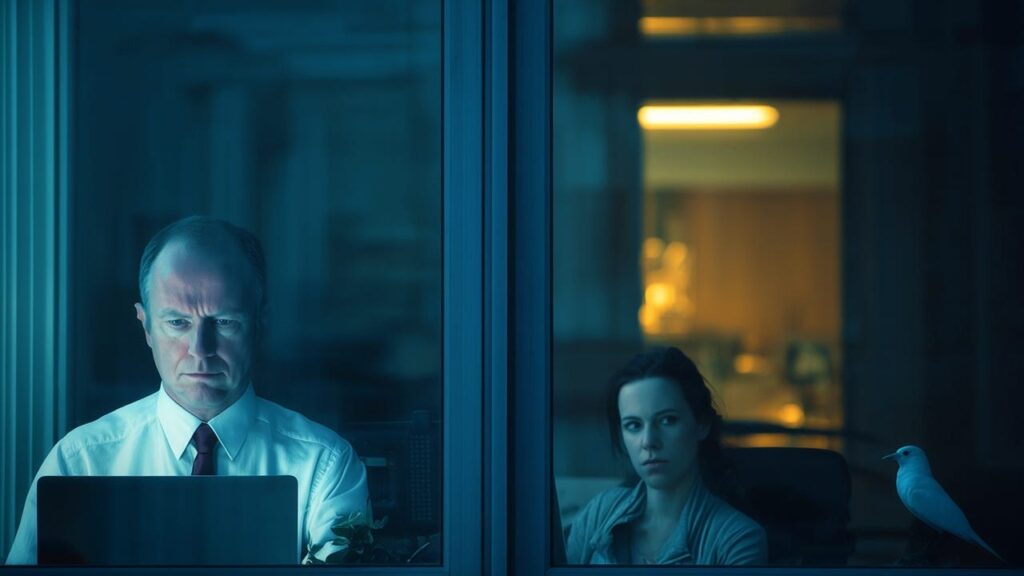
This time, five years ago in October 2020 we were deep in the heart of COVID territory. Most, if not all of our meetings were held online using Zoom, which had suddenly grown in popularity. We conducted Emotional Fitness Classes online three times a week using Zoom and did coaching and presentations online too. This was what work looked like for many then.
South Africa had been moved to Lockdown Level 1 in September 2020 so were enjoying more freedom. For the first time since March we ventured outside of Linden. We travelled all the way to Crowthorn, an area only 25kms away, but it was the longest car drive we had had since “lockdown” had become part of the country’s vocabulary.
The trip felt eerily dreamlike. The roads had barely any traffic at a time when they would normally be clogged with hooting taxis and impatient drivers late for work. Homes had become tight rooms juggling online school, online meetings, online deadlines with nowhere to go.
With the relaxed lockdown level and the start of summer, there was some renewed hope that we had transitioned through the pandemic and everything could go back to normal. A giddy sense of release had people meeting in person again, having parties and letting down their guard.
It did not last, of course. Infections skyrocketed over December and lockdown levels were clamped back down. The silly season got sillier and sadder. Celebrations were curtailed as many succumbed to the new strain of the virus. We couldn’t even go for a walk on the beach or take a bottle of wine to dinner.
Research into the past
Chantal has been doing some research into the years since we developed Shape of Emotion. She has been logging what we did over the days and months from May 2017 by going back to old calendars, journals and programmes. This past week the focus was on those hard years of the pandemic. It was a sobering and sometimes, sad experience.
Chantal reflected on her experience at a weekly online meeting:
“It has been hard being reminded of those years,” she said to a quiet audience, “It was such a difficult time for us. So hard on so many levels. When I came up for breath after trawling through a month or more from that period I felt ungrounded. It took time to come back to the present.”
Another participant noted how lockdown had been so very different for her.
“I took a sabbatical and went to stay on a farm with my kids. We were able to walk around and run free. We hardly knew there was a lockdown.”
Later that day, Chantal met someone for coffee. The topic came up again.
“I had left my corporate job and was studying something online,” he said, “When I think of that time, all I remember is that course.”
A global event that had far reaching effects impacted every person differently. For many the unpleasantness is not something that they would want to revisit. Whether it was traumatising or sublime, it is in the past. Best to look forward and plan for the future.
Planning is important
It is generally accepted that planning for the future is important to achieve goals. Who hasn’t read the sage advice from many famous people extolling the importance of planning?
Coming into 2020 we had many plans. There were plenty of things to look forward to including a renewed interest in our offering from the business world. The year started off with a trip to Durban to do a workshop with ECD practitioners. We felt buoyant and excited about the possibilities.
No-one could have predicted what was going to happen that year. Nostradamus maybe? Us mortals certainly not.
Our brains work better when we can predict. When we have past experience to refer to, it makes it easier to deal with what comes our way especially when it is a crisis. In this instance there was no precedent. Nations scrambled to make sense of the risks and collectively they decided to quarantine entire countries.
Everybody was caught in a stress response on a global scale with all the automatic reactions that it brought. Flight, fight and freeze. Flight was observed in the irrational panic buying that cleared shelves of, amongst other things, toilet paper. Fight showed up as people lashed out in confusion and fear. Searching for someone or something to blame, foreigners were viewed with suspicion, especially anyone who looked Chinese. Freeze revealed itself as entire communities locked indoors who could only sit in front of the television or computer screen unable to make coherent decisions.
What of those plans? In our case, we were so focused on an unknown future we forgot to look at the present. There were the immediate concerns around the family but largely our recollection is that we spent too much time navel gazing. Driven by competing levels of concern on personal, private and business levels, we got stuck in a whirlpool of going nowhere.
Not to point fingers
This is not to point fingers or blame anyone, specifically not ourselves. We did what we did in very difficult circumstances. And ours weren’t as bad as some. We got through that time somehow intact. The question is, what did we learn from it?
“So what did we learn?” asked Matthew on our weekly Sunday walk that we use to reflect on the week.
“I learnt how much time we wasted going around in circles, starting things and not finishing them,” said Chantal.
“Maybe not so much wasted as misdirected?” said Matthew.
“I could have been more present, and clearer on what we could control and what we could not.”
“Easy to say in hindsight.”
Yes, of course much easier in hindsight. Panic, uncertainty and the unknown do tend to fog up foresight.

Every game is different
Expectations and relying on past experience can result in disappointment. Two weeks ago the Springboks had a game that was as twilight zone as it was heavenly. A 67-30 trouncing of Argentina had everyone sitting up and taking notice. After a first half of strange mishaps and odd occurrences, the energies clicked and everything went the Boks way. Every cross kick found its mark, gaps opened up for brilliant tries, hands were safe and heads steady.
The rugby world went on a media frenzy. The team was hyped to the hilt and predictions of another flood of points against Argentina for the next match rolled in. But, as we all know, every game is different. And the last game of the championship at Twickenham was. For both teams.
For the Springboks, nothing would stick. Kicks went awry, balls slipped through hands, errors were penalised. It was messy and stumbling. For the Pumas, with nothing to lose and a never say die mentality, their game was on point. The Boks managed to hold on for a very narrow 29-27 win.
What happened? It was as if the team arrived at Twickenham expecting to play the way they had the week before. Expecting to meet a similar contender in the Pumas. Instead of playing the game they were faced with they were playing the week before’s game. It nearly cost them.
Presence rather than prediction
What the Springboks should have done is arrive at the last game as if the previous one had not taken place. Being present to the test at hand would have given them the opportunity to change their strategy quicker.
Like many, we plan our days, weeks and months. More or less. But are we really present to them? Life is full and busy. So much competes for our attention. Emails demand responses, messages ask for input, deadlines and daily administrative duties pepper our diaries and often scatter our plans.
Where did the day go? What did I accomplish? Are questions we ask ourselves when we go for our afternoon walks. Often the answer is: I don’t actually know. It felt busy but unproductive. Chantal will at times ask: What day is it?
It’s quite a challenge to be really present to the day as it awakens and unfolds. On those days that we get it right, the hours feel rich and satisfying. They seem to stretch out with purpose. More seems to be accomplished.
That said, it really is not easy to do. Mostly because we fall back on what we know and expect. When things don’t turn out the way we anticipated it can leave us feeling frustrated and dissatisfied. Practicing being present and undoing the automatic prediction mode delivers delights. We just wish we would remember to do it more often.
Until next time.
Yours in feeling,
Chantal & Matthew
Credits for this issue — Images: 5th Place
Written by

Chantal Dawtrey
Supporting women, especially in midlife and beyond, to navigate life transitions · Emotional fitness coach
Chantal supports women, especially in midlife and beyond, to navigate life transitions. She designs and delivers data informed digital programmes that build organisational emotional fitness. She helps people move beyond habitual patterns into greater awareness, agency, and well being.
With over 15 years of coaching experience and more than two decades in facilitation and human development, Chantal partners with individuals, teams, and organizations to build emotional resilience, enhance self-awareness, and develop sustainable well-being strategies.
Her primary focus as a coach is supporting women, especially those in their 50’s and beyond, to navigate profound life transitions with clarity, steadiness and self-reconnection. Finding answers to questions about identity, purpose, belonging and desire to an emergence, a reclamation and a return to self.
If you're going through a transition and would like support, let's talk.

Matthew Green
Reducing the Certainty Deficit in high-performing people and teams · Emotional fitness coach
Matthew works with athletes, performance teams, and anyone who wants to reduce the Certainty Deficit in their situation or context.
The Certainty Deficit is the space between what you can do and what your body will let you do when it counts. It is context-specific and situational. A person or athlete can have zero deficit in one situation and a significant one in another.
The body holds beliefs that keep the Certainty Deficit in place. These beliefs run deeper than self-talk and faster than any conscious strategy. When they shift, the ceiling shifts, and new possibilities arise.
Matthew is also an emotional fitness coach who supports individuals to live and lead from a place of inner clarity and stability. The work is somatic-first, practical, and grounded.
If you're seeing a pattern that current approaches haven't shifted, let's talk.
My origin story: Why elite athletes underperform when it counts
More from Enabling the How
It’s the oats
After weeks of challenge on many fronts it felt as if a threshold had been crossed. A smoother week with resolutions and relief.

The soundtrack to our lives
Leah knows what music she likes, so do we. Music is important to us and has a useful lesson to teach too.

All is not fair
The Boks are back and it’s great to be on the winning side but a wrong call by the ref can change that and the way we feel. All is not fair so managing our state is the real job to be done.